
SEJ AWARDS CELEBRATION RETURNS TO SEJ2026

The SEJ Awards for Reporting on the Environment honor the most compelling, rigorous and courageous environmental journalism across all media formats. Over more than two decades, SEJ Awards have honored reporting from newsrooms, ranging from local and regional outlets and public media stations to digital-first investigative teams and some of the world’s biggest national and international publications.
Each year, the SEJ Awards also recognizes the work of early-career journalists, students, and reporters from local and community outlets. Their work often reaches audiences that might otherwise go unheard, and many of these stories would not exist without the professional community, story grants, training and peer support that SEJ provides.
At our 35th anniversary conference in Chicago, we’re bringing back the in-person celebration of this work and the journalists behind it — reporters, editors, data journalists and broadcasters whose stories inform the public, hold institutions accountable and illuminate the systems shaping our planet and communities.
The Nina Mason Pulliam Award
One first-place winner will be selected to receive the Nina Mason Pulliam Award for Outstanding Environmental Reporting. The winner of this “best of the best” award will receive a $10,000 monetary prize, a commemorative trophy and up to $2,500 toward travel, lodging and registration support to attend the conference.
We’ll also recognize the volunteer screeners and judges whose expertise, care and time form the backbone of the awards process and help uphold the highest standards of environmental journalism.
Support the best of environmental journalism!
Support and celebrate the best environmental journalism of the year at the SEJ Awards Luncheon, as we return our annual celebration to our conference in Chicago. Partners may sponsor an awards table or underwrite an individual awards category, aligning your organization with excellence and impact in environmental reporting. Sponsorships provide meaningful recognition while honoring the journalists whose work increases the public’s understanding of the most urgent environmental issues of our time.
March 31, 2026 — The Society of Environmental Journalists is proud to announce the winners of the SEJ Awards for Reporting on the Environment, honoring outstanding journalism published between May 1, 2024 and July 31, 2025, as well as the best environmental books published in 2024.
The SEJ Awards are the world's largest and most comprehensive environmental journalism competition. This year, judges and subject-matter experts from the field, including volunteer independent journalists and academics read, listened to and reviewed 392 entries across 10 categories.
The winner of the Nina Mason Pulliam Award and its $10,000 grand prize is… “America's Toxic Trade” by Erin McCormick and Verónica García de León Robles for The Guardian and Quinto Elemento Lab (KEVIN CARMODY AWARD FOR OUTSTANDING INVESTIGATIVE REPORTING, LARGE).
This award is made possible by the generous support of the Nina Mason Pulliam Charitable Trust.
Congratulations to the winners of SEJ’s 24th Annual Awards for Reporting on the Environment!
WINNERS: SEJ’S 24TH ANNUAL AWARDS FOR REPORTING ON THE ENVIRONMENT
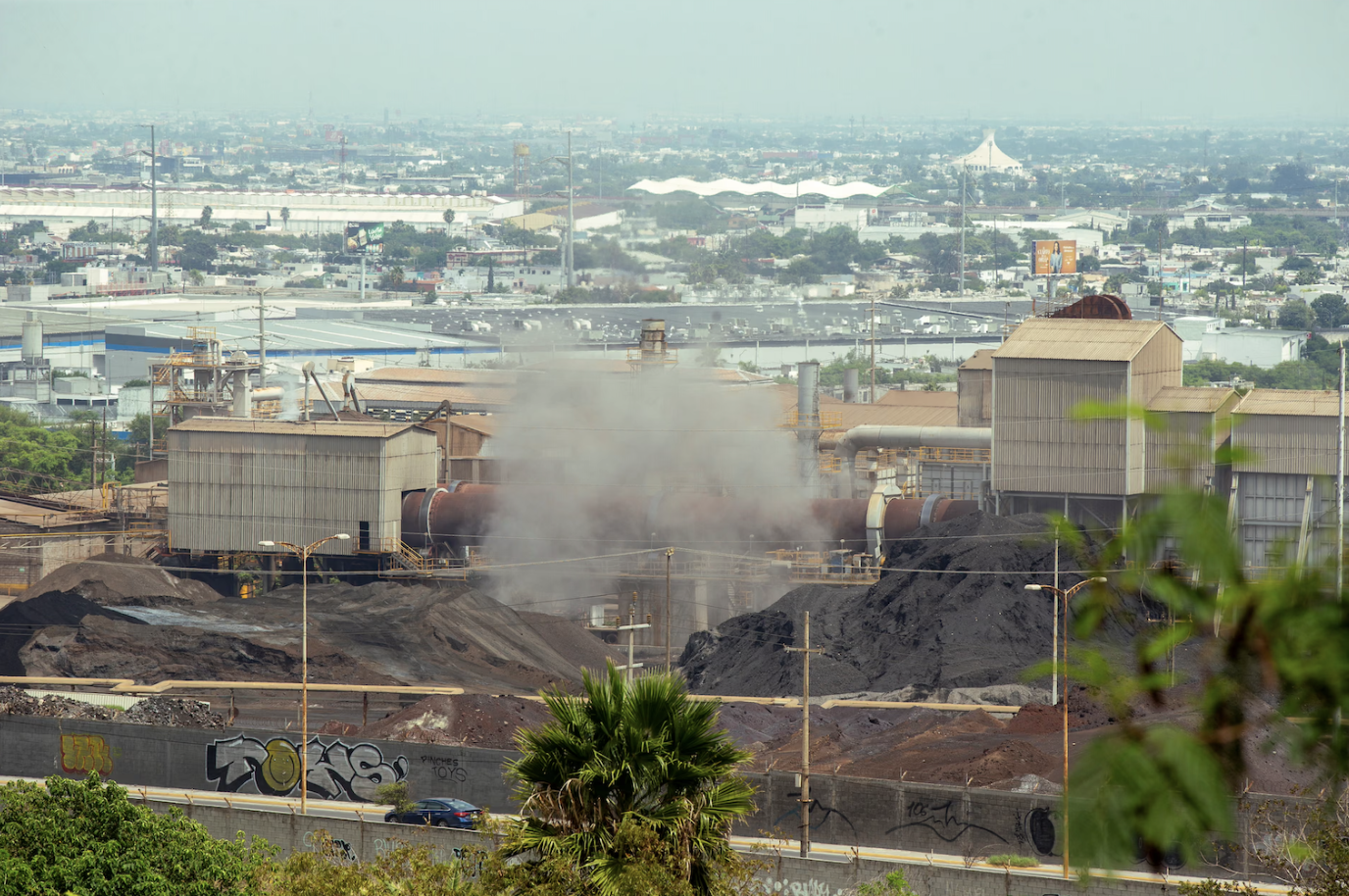
KEVIN CARMODY AWARD FOR OUTSTANDING INVESTIGATIVE REPORTING, LARGE
Credit: “America’s Toxic Trade,” Bernardo De Niz, Quinto Elemento Lab
-
By Erin McCormick and Verónica García de León Robles for The Guardian and Quinto Elemento Lab
Story links:
Revealed: US hazardous waste is sent to Mexico – where a ‘toxic cocktail’ of pollution emerges
‘A trash can for the US’: anger in Mexico and Canada over toxic waste shipments
Mexico authorities order factory cleanup after Guardian toxic waste investigation
Mysterious bags of ‘hazardous’ materials appeared in Mexico. Then we found more
Mexico factory that imports US toxic waste to relocate after Guardian report
Judges’ comments:
"This story combines compelling human narrative – from a vivid opening scene to strong quotes with affected community members – with impressive, useful and user-friendly data-driven visuals, use of public records and satellite imagery, policy analysis and collaboration with the scientific community for an overall incredible piece of work. The approach to look at one specific site before zooming out and looking at a broader trend was smart and well-executed. The impact was undeniable and immediate, and is what the judges decided landed this story/series in first place. This series exemplifies the spirit of this investigative award. The reporting was intentional and thorough, and unearthed something many of us in the U.S. never think about. One of the judges noted it was among the best public service work they’d ever read."
-
By Amanda Drane and Will Evans for The Examination and Houston Chronicle, with support from Caroline Ghisolfi (data) and Amelia Winger (web development)
Story links:
Oil companies leak toxic gas across Texas — making local residents sick
Timeline: One family's fight against toxic H2S gas leaks in West Texas
How dangerous is H2S? What to know about the hydrogen sulfide gas leaking from Texas oil sites
Judges’ comments:
“This piece used damning public records to reveal new information on the prevalence of a major health hazard that's not often written about, and showcase the failures of regulators to ensure that citizens are protected from harmful leaks. It is well-written — it starts with an opening scene that grabs you by the throat and never lets up from there. That is accompanied by compelling photos and data-driven visuals; the reporters clearly did a lot of on-the-ground reporting and relied upon a vast array of sourcing. The map tool offers a public service that goes above and beyond typical reporting. Its clear methodology is transparent and shows readers the limits of existing data. One judge called it a ‘phenomenal investigation.’ Another called it a ‘first-rate use of public inspection records.’”
-
By Tony Briscoe, Noah Haggerty and Hayley Smith for Los Angeles Times, with support from Calvin B. Alagot (photography), Phi Do (data analysis and graphic design), Lorena Iñiguez Elebee (data analysis and graphic design), Sean Greene (data analysis and graphic design), Melody Gutierrez (additional reporting), Sandhya Kambhampati (data analysis and graphic design), Kelvin Kuo (photography), Albert Brave Tiger Lee (video shooting, editing and production), Corinne Purtill (additional reporting) and Elijah Wolfson (editing)
Story links:
Finally we know where toxic ash from the L.A. wildfires could end up
Feds won’t test soil after L.A. wildfire cleanup, potentially leaving contamination behind
Corona-area dump burdened with underground fire sought to accept debris from L.A. infernos
Video: What the fires left behind in the soil of Los Angeles homeowners
Federal contractors improperly dumped wildfire-related asbestos waste at L.A. area landfills
Judges’ comments:
"This is an admirable and brave reporting endeavor. These stories provide a well-thought out service for community members and policy makers about the risks of not doing widespread soil testing. The package is thoughtfully put together, with explainers and videos offering readers an additional layer to understand their findings. It will add to the scant historical record of soil testing done after major urban conflagrations."
-
By Nick Bowlin and Mark Olade for ProPublica, Capital & Main and Gray Television/InvestigateTV, with illustrations by Peter Arkle
Story links:
Judges’ comments:
"This is an extraordinary example of accountability journalism. The reporters analyzed state records to estimate the staggering cost of cleaning up more than 2 million unplugged oil and gas wells in the United States — $151.3 billion — and the striking inadequacy of laws intended to make industry foot the bill. The investigation vividly documents present and future consequences in dollars, lives and environmental harm."
-
By Alejandro Melgoza Rocha for N+Focus (VIX / Televisa-Univision), with support from Íñigo Arredondo (deputy director), Williams Castañeda (filmmaker), Marcos García (filmmaker), Cecilia Guadarrama (screenwriting), Andrea Salinas (designer), Omar Sánchez de Tagle (director) and Luis Villegas (designer)
Story links:
Judges’ comments:
“This piece displays impressive and courageous fieldwork on the criminal enterprise based on the letter with strong and swift impact. The reporting obviously required gaining the trust of major characters across industries and countries, as well as serious legwork to obtain documents and other information that led to the unveiling of the pipeline illegal loggers use to smuggle their goods out of the country.”

KEVIN CARMODY AWARD FOR OUTSTANDING INVESTIGATIVE REPORTING, SMALL
Illustration from “The Maltese Falcon Poachers: European hunters endanger Egypt’s birds,” The New Arab
-
By Mahmoud Elsobky and Wael Elsayegh for The New Arab, with support from Anas Ambri (research and fact check) and Andrea Glioti (editor)
Story link:
Judges’ comments:
"This astonishing 15-month investigative project exposes a transnational environmental crime involving the illegal hunting and smuggling of endangered migratory birds in Egypt. Over a 15-month period, the team utilized undercover interviews, field evidence and leaked information to reveal how European hunters undermine EU-funded conservation efforts by poaching species like the Egyptian Vultures, Osprey, Falcons and other migratory birds. Despite significant data scarcity and security challenges, the reporting generated substantial international impact, including policy pressure within the EU Parliament and new conservation measures from the Egyptian government. By focusing on the affected ecosystems and including perspectives from groups in Egypt and Malta, the investigation highlights critical gaps in international enforcement and the urgent need for cross-border cooperation to protect global biodiversity and halt trophy hunting in all countries."
-
By Rico Moore for The Margin, with support from Bryce Cracknell (editor) and Chona Kasinger (photography)
Story link:
Judges’ comments:
“This is an exceptional year-long investigation into how Seattle City Light systematically violated the treaty rights of the Upper Skagit Indian Tribe for over a century. By combining extensive archival research and open-records requests with deeply personal interviews from Tribal leaders, scientists and legal experts, the reporting successfully overturned a long-standing false narrative that natural barriers, rather than dams, prevented fish migration. The investigation is honored not only for its clarity in explaining complex legal and historical issues but also for its significant real-world impact — directly influencing dam license negotiations and contributing to the decision to grant only a temporary one-year operating license rather than a long-term renewal. This work stands as a vital piece of accountability journalism that centers the rights and ancestral lands of the Upper Skagit Tribe while forcing a correction of the historical record.”
-
By Alessandra Bergamin for In These Times, with illustrations by Matt Rota
Story links:
Judges’ comments:
"This work is a harrowing and meticulous investigation into the global pattern of state-sponsored violence against environmental activists. The reporting team demonstrated extraordinary journalistic rigor by manually building a first-of-its-kind database of nearly 600 killings over a decade, cross-referencing public records with government data to reveal that half of these deaths involved state actors. By weaving the individual story of Brandon Lee — a U.S. citizen paralyzed in an assassination attempt in the Philippines — into a broader investigative framework, the submission successfully exposed a critical accountability gap by linking these attacks to U.S. security assistance and military training in the Philippines. This work, which involved months of high-risk fieldwork in militarized indigenous communities, has achieved significant recognition for its vital role in centering Indigenous land defenders and highlighting the systemic risks faced by activists worldwide."
-
By Nicholas Kusnetz and Katie Surma for Inside Climate News, with graphics by Paul Horn
Story links:
In Honduras, Libertarians and Legal Claims Threaten to Bankrupt a Nation
Should Companies Get Paid When Governments Phase Out Fossil Fuels? They Already Are
How Wealthy Corporations Use Investment Agreements to Extract Millions From Developing Countries
Judges’ comments:
"This reporting is a dogged multi-country investigation into the investor-state dispute settlement (ISDS) system, an obscure legal framework that allows foreign corporations to seek massive taxpayer-funded payouts from governments enacting environmental or public health regulations. By synthesizing thousands of pages of court records, corporate filings and arbitration documents, the reporters exposed how this system effectively hamstrings efforts to combat global warming and disproportionately harms developing nations. The series translated complex legal concepts into a lucid, accessible narrative that achieved significant real-world impact, reaching high-level policymakers and preceding a Biden administration action to limit ISDS claims. Ultimately, the reporting provides a vital service by bringing transparency to a secretive ‘wealth extraction mechanism’ that prioritizes corporate profits over national sovereignty and environmental protection."
-
By Olga Loginova for Type Investigations, with support from Susie Armitage (story editor and co-producer), Sasha Belenky (investigative editor), Zak Cassel (fact check), Noah Collins (a citizen of Cherokee and White Mountain Apache Tribes, cultural sensitivity reader), Colleen Cox (audio editor and visuals), Dontonio Demarco (voice actor), Mobéy Lola Irizarry (music composition and performance), Matt Noble (trailer mixer), Matthew Rubenstein (associate producer), Iqra Salah (fact check), Sandy Smallens (executive producer and showrunner), Tom Sullivan (sound design, mix engineering and music composition), Paul Vitolins (sound design, mix engineering and music composition), Max Wasserman (series producer) and Matt Zivkovic (cover art)
Story links:
Judges’ comments:
"This investigative narrative podcast documents the first federal attempt to resettle an entire community — the Indigenous residents of Isle de Jean Charles, Louisiana — due to climate change. Reported over four years by Olga Loginova, the series provides a rigorous and empathetic account of the resettlement project, which was initially hailed as a success, but is revealed through the investigation to be a ‘cautionary tale’ marked by conflict and governmental mistakes. By centering the voices of both the Jean Charles Choctaw Nation and the United Houma Nation, the reporting addresses critical issues of environmental justice, racial reckoning and government accountability, while contextualizing the community's displacement within a broader history of injustice. Ultimately, the series serves as a vital analysis for future community relocations, highlighting the deep cultural and historical complexities faced by marginalized populations on the front lines of climate migration."
-
By Quinn Glabicki for Pittsburgh's Public Source
Story links:
Judges’ comments:
“This work is recognized for its accountability-driven investigation into a 2022 fracking mishap in New Freeport, Pennsylvania. The reporter utilized dogged public records requests to unearth thousands of documents and critical video evidence that proved a ‘direct correlation’ between the fracking company EQT Corp.’s operations and the eruption of gas and fluid from the ground — evidence the company had previously denied. The reporting, which combined high-risk data analysis with intimate photojournalism and community-based storytelling, led to significant real-world impact, including a federal class-action lawsuit and the prevention of forced non-disclosure agreements for residents in need of clean water. By distributing the work through a unique partnership with ten other publications and the Pulitzer Center, the investigation reached both the impacted rural communities and the broader national audience.”
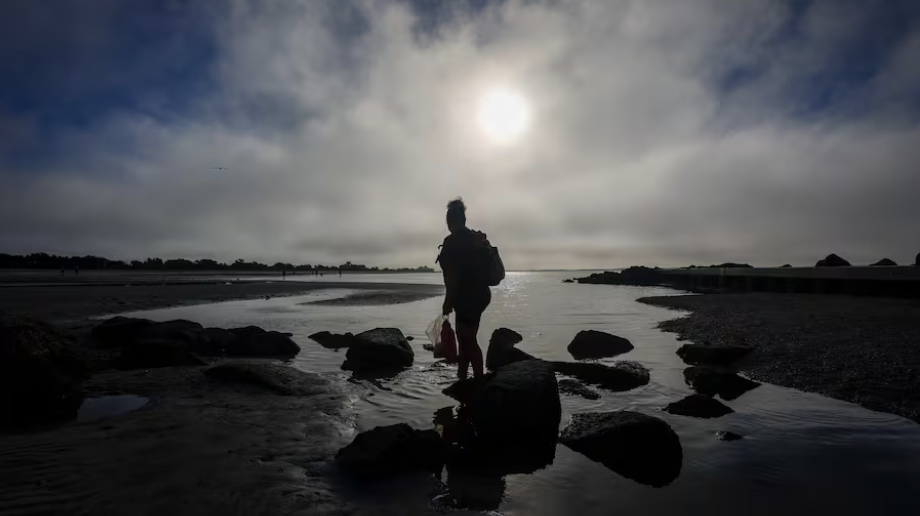
OUTSTANDING BEAT REPORTING, LARGE
Credit: Chris Urso, Tampa Bay Times
-
By Max Chesnes and Emily L. Mahoney for Tampa Bay Times
Story links:
Months Ago, Florida OK’d Giving 324 Acres of State Forest to Golf Course Company
Florida State Parks Whistleblower Personnel Files Released by DeSantis Admin
Florida Forestry Official Questioned DeSantis-Backed Swap of State Forest to Golf Company
The Behind-the-Scenes Story of the Florida State Parks Scandal
Judges’ comments:
“Impressive reporting and storytelling that demonstrates clear impact via community outrage and ultimately an abandonment of development plans by Governor DeSantis. Subsequent engagement from politicians to pass legislation that prevents the public parks from being developed into golf courses in the future is outstanding.”
-
By Ian James for Los Angeles Times
Story links:
How a ‘death trap’ for fish in California’s water system is limiting the pumping of supplies
How a water scientist hopes to save California habitats that could be pumped dry
The American West’s last quarter-century ranks as the driest in 1,200 years, research shows
‘It’s really sad’: River dries up abruptly in Bakersfield, leaving thousands of dead fish
As California farms use less Colorado River water, worries grow over shrinking Salton Sea
Judges’ comments:
“Impressive reporting with demonstrated impact on the California Attorney General and environmental restoration.”
-
By Todd Woody for Bloomberg News
Story links:
The Future of Deep Sea Mining Hinges on a Contentious Election
A Fraught Election Just Reshaped the Next Steps for Deep Sea Mining
Miner Applies to Exploit Deep Sea Under Controversial Trump Executive Order
Trump’s Push For Deep-Sea Metals Clashes With UN Ocean Treaty
Trump’s Critical Minerals Obsession Reignites Deep-Sea Mining
Judges’ comments:
“Impressive international reporting with demonstrated impact on a secretive UN-affiliated organization.”
-
By Gabrielle Canon for The Guardian, with graphic design by Andrew Witherspoon
Story links:
Mangled trees, charred homes and ashen land: inside a community leveled by the Palisades fire
US faces alarming firefighter shortage during peak wildfire season, data reveals
Judges’ comments:
“Impressive reporting that shows impact via canceled development, as well as briefings from the National Fire Protection Association and the House Oversight Committee.”
-
By Sharon Lerner for ProPublica
Story links:
This Storm-Battered Town Voted for Trump. He Has Vowed to Overturn the Law That Could Fix Its Homes.
Donald Trump’s No. 2 Pick for the EPA Represented Companies Accused of Pollution Harm
“We Feel Terrorized”: What EPA Employees Say About the Decision to Stay or Go Under Trump
Trump’s EPA Plans to Stop Collecting Greenhouse Gas Emissions Data From Most Polluters
Judges’ comments:
“Impressive reporting on important topics within a governmental agency that has been severely impacted by this administration.”
-
By Lester Graham for Michigan Public
Story link:
Judges’ comments:
"Impressive audio storytelling.”

OUTSTANDING BEAT REPORTING, SMALL
Credit: Grist / Eva Marie Uzcategui / The Washington Post via Getty Images; Joe Raedle / Getty Images; Getty Images
-
By Ayurella Horn-Muller for Grist
Story links:
Mango farms where? Climate change is scrambling where the world’s food is grown.
This Alaska Native fishing village was trying to power their town. Then came Trump’s funding cuts.
Judges’ comments:
“The reporting in this collection is vivid, memorable and well executed. Connecting immigration with food and climate change is a great way to tell these important stories. The articles had an impact on the communities they featured, and gave voice to those who are often excluded from discussions about the future of the food system. The judges loved the variety of stories and sweeping scope.”
-
By Rachel Becker for CalMatters, with photography by Loren Elliott , John Gastaldo, Miguel Gutierrez Jr., Martin do Nascimento and Larry Valenzuela, and data by Arfa Momin, John Osborn D'Agostino, Natasha Uzcátegui-Liggett
Story links:
These 42 California dams need repairs. But lawmakers cut the funds in half
Californians to face steep fines for violating water orders under new legislation
‘I won’t let them drink the water’: The California towns where clean drinking water is out of reach
A new invader threatens California water supplies. Can the state stop its spread?
Judges’ comments:
“Thoughtful, clear and meaningful reporting on one of California's most important issues — water. Stories hold power to account and provide transparency to the way policies and regulations are implemented. Makes good use of data, graphics and evocative photography which boost the portfolio.”
-
By Alex Kuffner for The Providence Journal
Story links:
Rerouting History: How the Blackstone lost its river herring, and the plan to bring them back
‘Ghost’ Revival: How restoring river herring would help heal the Blackstone
Judges’ comments:
“Deeply reported, colorful dives into the issues affecting the biodiversity of Rhode Island. It takes pluck to write about subjects like plankton, beech trees and herring, and the author pulls it off. He weaves historical narratives with present day science and policy to tell enjoyable stories about overlooked but important subjects.”
-
By Matt Simmons (primary reporter), Mike de Souza, Sharon J. Riley (editor) and Kate Schneider for The Narwhal, with photography by Marty Clemens
Story links:
Indigenous leaders burn pipeline agreement, set up B.C. road blockade
Unravelling the complicated past of B.C.’s newest pipeline conflict
Documents reveal over 1,000 potential infractions left unchecked by B.C.’s energy regulator
Judges’ comments:
“Skillfully reported stories using leaked documents, other documents obtained through public records requests and confidential sources. Among the important stories in this portfolio are an exposé of the secret strategies used by a fossil fuel company to influence climate policy, and details of lax regulation enforcement enabling fossil fuel companies to pollute with impunity. Delivering stories like this requires reporters to go the extra mile. These stories also had a real world impact.”

OUTSTANDING EXPLANATORY REPORTING, LARGE
Screenshot from “We need to rethink our relationship with nature,” All Hail The Planet series, Al Jazeera English
-
By Ali Rae for Al Jazeera English, with support from Salah A A Khadr (editor), Pierangelo Pirak (animator), Meenakshi Ravi (executive producer) and Ben Walker (production and camera)
Story links:
Judges’ comments:
"We believe ‘All Hail the Planet’ is more than a climate series. It is a masterclass in global storytelling. Across ten visually striking and deeply reported episodes, it transforms a complex, often overwhelming crisis into a clear, urgent and profoundly human narrative. By weaving together scientists, decision-makers, frontline communities and vulnerable voices, it captures the true scale of the climate battle and the power struggles shaping it. The series boldly tackles misinformation, psychological manipulation, food insecurity and the uncomfortable question of human responsibility, all with rigor and fairness. For its ambition, impact and exceptional craft, it stands head and shoulders above the competition and deserves first place.”
-
By Jonathan Schienberg for FRONTLINE (PBS), with support from Refael Kubersky (additional reporting), Dana Miller Ervin (producer), Tim Grucza (producer), Lauren Ezell Kinlaw (producer), Robert Kirwan (producer), Fanny Lee (producer), Kate McCormick (producer), Laura Sullivan (producer and correspondent) and Rick Young (producer)
Story links:
After Hurricane Helene, Are We Ready for the Next Big Storm?
Recovery Failure: Why We Struggle To Rebuild for the Next Storm
Judges’ comments:
"A compelling integration of long-term documentation spanning more than a decade, interviews and policy analysis in the context of a human catastrophe represents precisely the approach needed for journalism that engages with our climate futures at all times and in all places on this planet. Beautifully shot and packed with powerful interviews, this piece not only gets the human element of tragedy right, it asks the hard questions about how we react to climate disasters.
It's a compassionate story that is nevertheless unflinching about the harsh realities and tough decisions when faced with climate disruption. It's high-quality journalism that engages the emotions as well as being scrupulously researched and policy focused."
-
By Jenn Thornhill Verma and Johnny Lam for The Globe and Mail, with support from Evan Annett (digital build), Sarah Budgen (editor), David Crosbie (podcast producer), Ryan MacDonald, Chris Manza (digital build), Clare Vander Meersch (photo editor), Melissa Tait (photo and video editor), Madelaine White (podcast producer) and Murat Yukselir (visual data)
Story links:
On thinning ice, Labrador Inuit are taking the fight against climate change into their own hands
Labrador Inuit have dozens of words to describe sea ice travel. Hear them all here
Judges’ comments:
“The project stands out for the originality of its premise. Beautifully written and photographed, this piece highlights a story that simultaneously is about a remote part of the world and also about all of us. The audio components highlight the unique culture, and the reporting does a wonderful job of letting those most impacted speak for themselves. It blends high-quality science reporting with service journalism.”
-
By Lisa Song for ProPublica, with support from Alex Bandoni (visuals), Anna Donlan (story designer), Max Gunther (illustrator) and Lucas Waldron (graphics)
Story links:
Biden EPA Rejects Plastics Industry’s Fuzzy Math That Misleads Customers About Recycled Content
The Plastics Industry’s Wish List for a Second Trump Administration
Judges’ comments:
"Lisa Song’s investigation is powerful and deeply consequential. A terrific combination of an overview that explains the pyrolysis issue, a discussion of the impact for consumers and tracking of the policy movement on the issue. When the California attorney general’s office sued ExxonMobil for deceptive practices, this story was cited. That's journalism that makes an impact.”
-
By Keerti Gopal, Juanpablo Ramirez-Franco (Grist), Peter Aldhous, Clayton Aldern (Grist), Amy Qin (WBEZ) for Inside Climate News, with support from Grist’s Katherine Bagley, editor; Esther Bergdahl, production; Derek Harrison, production; Jamie Smith Hopkins, editor; Paul Horn, graphics; WBEZ’s Nader Issa, editor; WBEZ’s Justin Meyers, interactive map; WBEZ’s Alexandra Salomon, editor; Grist’s Mia Torres, interactive map; WBEZ’s Anthony Vazquez, photo; and Grist’s Parker Ziegler, interactive map
Story links:
Many Chicagoans likely to wait decades for dangerous lead pipes to be replaced
Chicago was supposed to warn residents about toxic lead pipes. It’s barely started.
How We Mapped Chicago’s Lead Pipe Problem and What We Learned
Lead pipe problem worst in Chicago’s majority Black and Latino neighborhoods
Judges’ comments:
"It’s tangible community-service reporting that has demonstrated utility for Chicagoans. This set of stories calls attention to an issue many thought solved, and makes a compelling environmental justice case for our attention. The interactive map stands out as a model of public-service data journalism. The decision to align the data with race and poverty indicators in Chicago is especially important, making clear that this is not just an infrastructure story but one of environmental injustice."
-
By Patrick Greenfield for The Guardian, with support from and Tess McClure (editor)
Story links:
Trees and land absorbed almost no CO2 last year. Is nature’s carbon sink failing?
What happens to the world if forests stop absorbing carbon? Ask Finland
In some UK woodlands, every young tree has died. What’s going wrong?
Judges’ comments:
"This is a very strong example of climate reporting that takes a granular example, the beetle species, and uses it to tell the broader story. It's a solid, important series that just falls short of the top tier in this category due to the strength of other story packages. Patrick translated complex scientific processes into accessible journalism without oversimplification, while maintaining a careful, evidence-based tone."
OUTSTANDING EXPLANATORY REPORTING, SMALL
-
By Ian Urbina for The Outlaw Ocean Project, with support from Elisha Brodsky (video and copy editor), Austin Brush (research), Jake Conley (research), Bobbi-Jo Dobush (research/reporting), Joe Galvin (research and data), Pasika Khernamnuoy (interpreter), Toby Lester (video and copy editor), Maya Martin (research), Malaka Rodrigo (research/reporting), Susan Ryan (research), Megan Wahn (research/reporting), Roisai Wongsuban (research/reporting) and Komchaay Yukhon-a-disai (interpreter)
Story links:
Judges’ comments:
"This piece sets an ambitious goal to fill a knowledge gap and fully delivers illuminating why “the most important place on earth that virtually no one has ever heard of” is being systematically destroyed on the largely lawless high seas. The journalist combines powerful explanatory framing with moral clarity and exceptional reporting, drawing readers into a subject that is difficult to ignore and impossible to forget. The human stories compellingly anchor the systemic analysis, while scientific collaboration reinforces its credibility. The journalist’s bravery in accessing and covering such a volatile topic in an extremely dangerous location is also very commendable. A comprehensive and disciplined piece of journalism that renders an invisible global crisis starkly visible."
-
By Schirlei Alves, Kevin Damasio, Letícia Klein and Thiago Medaglia for Ambiental Media, with support from Rodolfo Almeida (design), Sofia Beiras (design), Marina Gama Cubas (research and data), Laura Kurtzberg (visual data), Fernanda Lourenço (editorial coordination), Maria Martinez (research and data), Gilberto Nerino de Souza Junior (spatial data analysis), Leticia Helena Prochnow (operational), Ronaldo Ribeiro (text), Jonas Rossi (web infrastructure), Yuri Salmona (scientific coordination and conception), Jorge Santos (spatial data analysis), Felipe Sodré (spatial data analysis), Ariel Tonglet (development) and Miguel Tomé Vilela (edition)
Story link:
Judges’ comments:
"When a general audience can digest technical or specialist knowledge and contexts, then the work of an explainer is done — and that is exactly what this story achieves. By combining complex reporting methodologies, sophisticated data journalism and compelling visual storytelling through an interactive platform, the project makes intricate hydrological science accessible and emotionally resonant for non-specialists. The work offers significant public education value while providing data and insight that policymakers and advocacy organizations can meaningfully use. An authoritative, data-driven and relevant explainer through and through."
-
By Xavier Bartaburu, Fernanda Calé, Wellington Melo, Felipe Migliani, Douglas Teixeira and Thiago Medaglia for Ambiental Media, with support from Rafaela Abrahão (undergraduate researcher), Lucas Alves (development), Sofia Beiras (design), Mariza Ferro (research coordination and design), Michelle Flores (program manager), Luiz Iria (illustrations), Laura Kurtzberg (maps), Fernanda Lourenço (editing), Helena Portilho (press advisory), Samantha Prado (social media), Leticia Helena Prochnow (operations), Alice Ratton (post-doctoral researcher), João Rezende (undergraduate researcher), Felipe Sodré (spational data analysis) and Miguel Vilela (editorial coordination)
Story link:
Judges’ comments:
"Rio 60ºC is a remarkable explainer project that sets its own pace as an innovatively technical project that moves beyond reporting to generate new public data. Through the powerful framing of ‘climate gentrification,’ the Ambiental Media team makes complex hydrological risk accessible to general audiences. Timely and future-focused, this project is notable for combining scientific rigour with public utility."
-
By Rebecca Bowe, Chris Roberts and Michael Stoll for San Francisco Public Press, with support from Kurt Aguilar (copy editing), Michele Anderson (copy editing), John Angelico (web design), Noah Arroyo (proofreading), Mel Baker (audio editing), Justin Benttinen (sound gathering), Reid Brown (graphics), Stacey Carter (archival research and illustration), Maya Chupkov (community outreach), Liz Enochs (editing), Ali Hanks (fact check), Guillermo Hernandez (portfolio), Ambika Kandasamy (research editing), Richard Knee (copy editing), Lila LaHood (proofreading), Megan Maurer (audio editing), Yesica Prado (portfolio), Dani Solakian (fact check), Sylvie Sturm (proofreading), Sharon Wickham (portfolio), Liana Wilcox (audio editing) and Zhe Wu (proofreading)
Story links:
Judges’ comments:
"Crafting an urgent environmental story about the Cold War in 2025 requires a high level of journalistic skill and rigour, and this team succeeds convincingly. This inherently investigative work employs a seamless explanatory architecture to recover buried Cold War history while clearly articulating its present-day environmental justice consequences. What truly distinguishes the project is its compassionate, rigorously developed environmental justice through-line, supported by sophisticated multimedia elements that deepen understanding rather than merely embellish it. The piece not only uncovers new knowledge but makes it accessible, resonant and urgently relevant."
-
By Amitha H. Balachandra for The Wire. Reporting for this story was supported by the Environmental Data Journalism Academy — a program of Internews’ Earth Journalism Network and Thibi.
Story links:
Part 2: Could soil deficient in iron be fuelling anaemia in Marathwada
Part 3: How sugarcane determines the politics of Maharashtra
Judges’ comments:
"A powerful examination of an underreported crisis that effectively makes use of explainer journalism to link ecology with health and power. The reporting uncovers significant revelations, yet remains accessible, especially with its clear framing of the region’s political economy. Overall, a well-researched and analytically coherent piece."
-
By Julie Cart for CalMatters, with support from Marla Cone (editor), Joel Eastwood (illustrations), Miguel Gutierrez Jr. (photo), Gabriel Hongsdusit (illustrations), Jeremia Kimelman (map) and Natasha Uzcátegui-Liggett (map)
Story link:
Judges’ comments:
"An effective accountability explainer that rigorously answers the essential question: ‘If we spent $3 billion over 25 years, why is Tahoe still in trouble?’ The clarity of that central finding gives the series its explanatory power. Excellent use of data demonstrates the intellectual rigour needed for effective environmental journalism, translating complex funding and ecological dynamics into accessible public understanding."
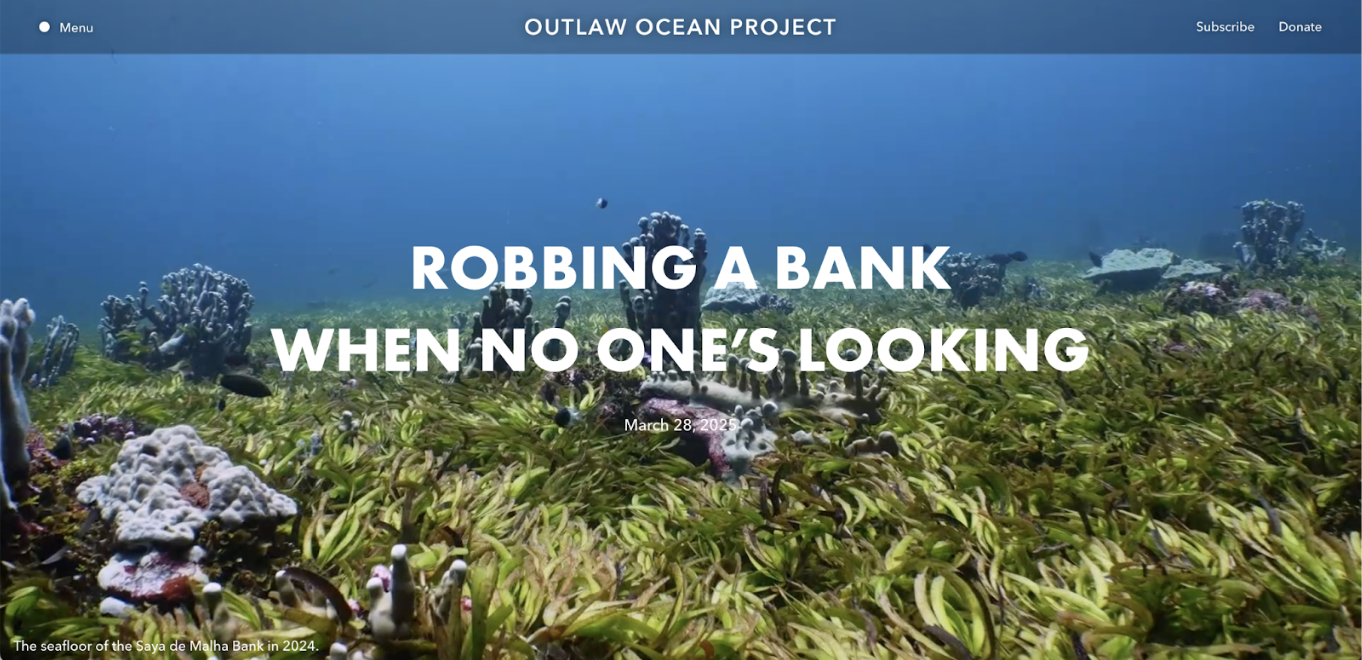
Screenshot from “Saya de Malha: Robbing a Bank When No One's Looking,” The Outlaw Ocean Project
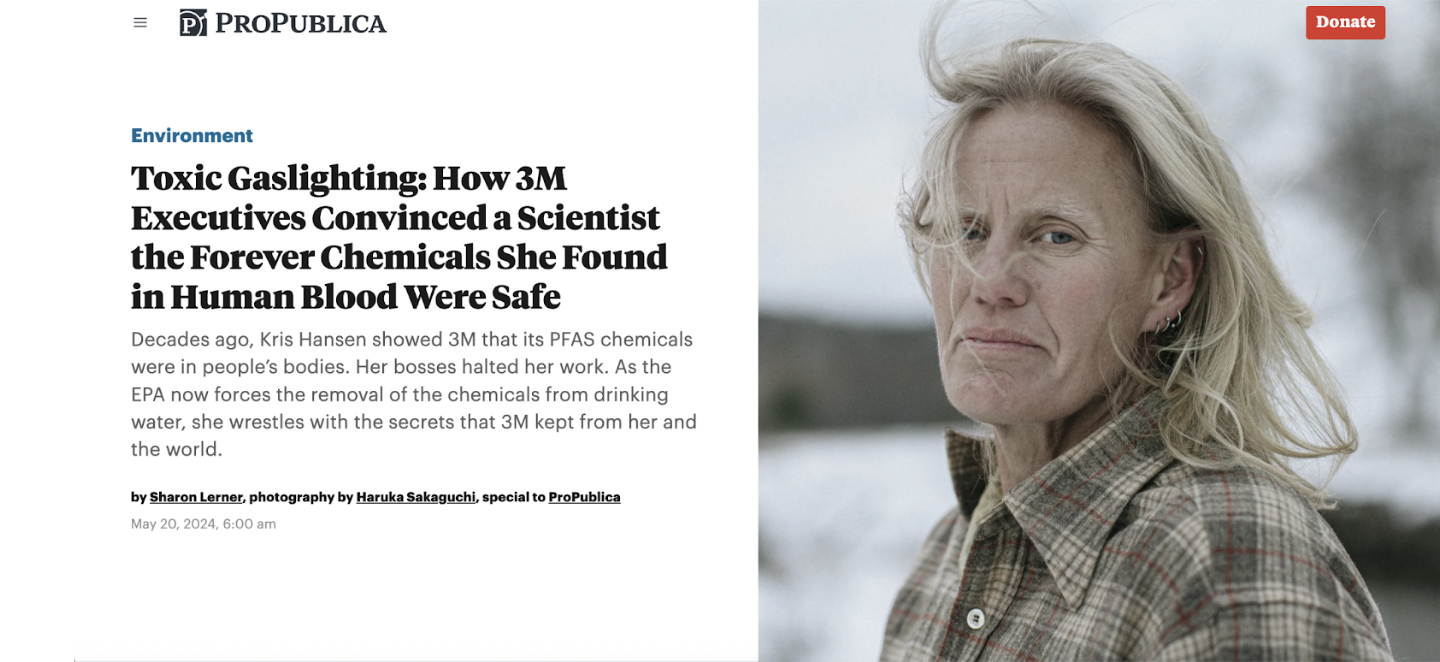
OUTSTANDING FEATURE STORY, LARGE
Credit: Haruka Sakaguchi, ProPublica
-
by Sharon Lerner for ProPublica and The New Yorker
Story link:
Judges’ comments:
“Kris Hansen's emotional journey through a web of obfuscation reads like a detective novel. The story’s pacing is concise and the narrative, gripping and haunting. The rigorous fact-checking the text underwent is evident and also reflects the author’s expertise in the subject matter, gleaned from years of background research and source building. Hansen’s emotional arc is handled with care, making the reporting feel both incisive and humane.”
-
By Julia-Simone Rutgers for The Narwhal, with photography by Tim Smith and editing by Scott Gibbons and Sharon J. Riley
Story link:
Judges’ comments:
“This standout piece of solutions-focused storytelling treats Indigenous-led conservation with respect and empathy. It weaves traditional ecological knowledge and oral history into a narrative that feels grounded and uplifting. Photos and maps strengthen the reporting and help transport the reader to northern Manitoba, envisioning a world where Indigenous sovereignty is celebrated.”
-
By Tess McClure for The Guardian
Story link:
Judges’ comments:
"The author’s eye-opening portrayal of the science of abandonment dispels long-held misconceptions about nature. The integration of science and narrative offers complex insights that remain engaging and accessible. The vivid environmental details of the rural Bulgarian countryside convey a rich sense of place and the stakes of what gets left behind as urbanization and population decline continue. The result is both intellectually satisfying and emotionally resonant.”
-
By Jeremy Young for Al Jazeera English, with support from Laila Al-Arian (executive producer), Linus Bergman (audio), Natasha Del Toro (correspondent), Rodrigo Galdos (director of photography), Riham Mansour (digital producer), Warwick Meade (editor) and Mehr Sher (fact check)
Story link:
Judges’ comments:
“This entry combined character-driven reporting with clear public health science and vivid scene work. The interviews are notably candid — capturing key decision-makers on camera to drive home the need for accountability. Paired with intimate moments filled with tears, the documentary highlights the costs of unforgiving workplaces that depend upon human toil under the hot sun. The piece offers commonsense solutions and illustrates the costs of remaining willfully blind to the need for change.”
-
By Rodrigo Abd, Teresa de Miguel and Megan Janetsky for The Associated Press, with support from Anna Jo Bratton (editor), Karen Carballo (video), Caleb Diehl (designer), Carlos Dorantes (video), Peter Hamlin (illustrator), Enric Marti (photo), Peter Prengaman (producer) and Kathy Young (producer)
Story link:
Judges’ comments:
“The interactive elements and photography effectively transport the viewer to the sacred water bodies in the Yucatan, giving readers a textured sense of how political promises can deliver economic benefits and ecological risk. The authors’ immersive visuals and vivid text illustrate the push and pull of this dilemma as we submerge ourselves in increasingly hazy waters.”
-
By Sheryl Tian Tong Lee and Faris Mokhtar for Bloomberg News, with support from Sharon Chen (editor), Steph Chung (producer), Muhammad Fadli (photo and video), Jody Megson (production), Julie Snider (video), David Stringer (editor), Nanang Sujana (video), Yuki Tanaka (photo and production), Lisa Yuriko Thomas (producer)
Story link:
Judges’ comments:
“This ambitious project holds robust explanatory power reflective of the teamwork that produced it. Clean framing, detailed documentation and transportive visuals helped decode the esoteric carbon credit market and highlight its human stakes. The overall package reflects significant coordination and rich sourcing.”
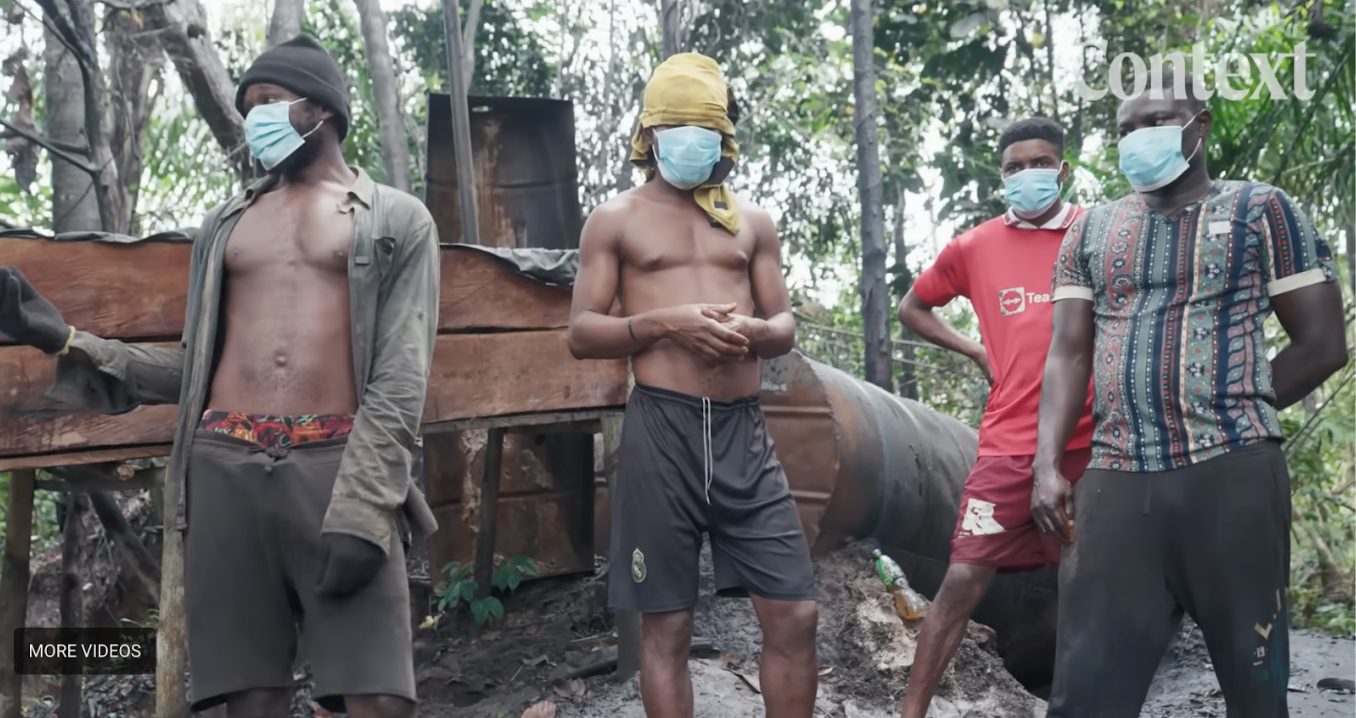
OUTSTANDING FEATURE STORY, SMALL
-
By Bukola Adebayo and Albert Han for Context, powered by Thomson Reuters Foundation, with support from Mujeb Ahmadzay (production manager), Seth Dalton (editor), Ranel Felix (additional camera), Fintan McDonnell (additional camera), Tife Owolabi (local producer), Ero Partsakoulaki (producer), Roman Safiullin (editor), Simpa Samson (camera), Jacob Templin (executive producer), Rosalind Thacker (social media manager) and Karif Wat (motion graphics)
Story link:
Judges’ comments:
“An excellent story that comprehensively breaks down the causes and environmental consequences of illegal oil refining in Nigeria, poignantly shows us why people are driven to this work even as it poisons their homes, and points to the global economic systems that create these local financial pressures -- and ultimately, a human and environmental catastrophe. Beautifully shot, well-reported and a stellar job of getting access to an illegal operation. It also places this conflict, or contradiction, in a global context. The story was highly engaging and the framing sharp: highlighting issues of environmental justice and how they sometimes conflict with the basic needs of disadvantaged communities.”
-
By Nyasha Bhobo and Tsitsi Bhobo for Earth Island Journal
Story link:
Judges’ comments:
"Excellent reporting and storytelling on a critical and under-covered climate issue. The author expertly weaves the narrative of an illegal border crossing with clear explanations about how climate change pushes people to migrate and changes landscapes to make crossing easier. Impressive work to embed with the group of undocumented migrants featured in the story. This feature story offers a very interesting take on climate change-induced migration, and presents a fresh perspective on the issue: climate change makes migration across Southern Africa more difficult, but eases it at the same time. The storytelling is effective, very human-centric and well-sourced, and does a great job at balancing geopolitics with climate migration and survival.”
-
By Anya Groner for Sea Change Podcast and Economic Hardship Reporting Project
Story link:
Judges’ comments:
“This audio feature does a beautiful job at bringing together history, culture and the impacts of ecological disaster on Vietnamese-American communities in Louisiana. The storytelling is poignant and empathetic.This is a podcast that features the story of a Vietnamese population who had fled the country and migrated to Louisiana to become shrimpers, only to find that livelihood challenged in recent years due to extreme weather and storms, climate change and bad policies. The script was well written, not hyperbolic, and is a good follow-up to hurricane stories and communities we only heard from immediately after the catastrophe.”
-
By Christian Elliot for Hakai Magazine, with support from Muriel Alarcón (local reporting) and Krista Langlois (editor)
Story link:
Judges’ comments:
“This story was so well-written and presented an interesting look into how cold water corals reproduce. It is a strong science story with high ecological stakes for a key indicator species and has beautiful visuals to accompany the wonderful writing. This is a sparkling feature and a delight to read. The author has a fascinating topic and makes the most of it by bringing to life the strange, alien lives of deep water corals — and the scientists who study them. A great example of science journalism that leaves you a little more in awe of the world than you were before you read it. Good writing, engaging story-telling, on an important topic of dying coral reefs. Nice to know the diversity of reefs, which isn’t much highlighted when people talk about the tragedy of them dying. It’s also one of the few articles that featured a female scientist, and followed her on her obsession with coral reefs.”
-
By Chloe Williams for The Narwhal, with support from Michelle Cyca (editor) and Gavin John (photos and video)
Story link:
Judges’ comments:
“This story did a great job at centering Inuit voices in a conversation about geoengineering to save the Arctic. A great exploration of a unique approach to geoengineering that shows promise because it works with local communities and indigenous groups, unlike previous failed attempts. It’s a good look at the local impacts of climate change on communities in the far north. It shows how scientists are looking for solutions to melting ice and people are weighing possibilities to maintain their lifestyles, without claiming to be a perfect solution — an honesty that we appreciate. This piece is well written and engaging, with beautiful images.”
-
By Jake Bolster for Inside Climate News
Story link:
Judges’ comments:
“This story was a heartbreaking look into how one case of a brutal murder of a wolf shone light on Wyoming’s hunting and endangerment policies, while making an argument to preserve wolves because of their ecological impact.”
Credit: Screenshot from “Meet the illegal oil refiners of Nigeria,” Context
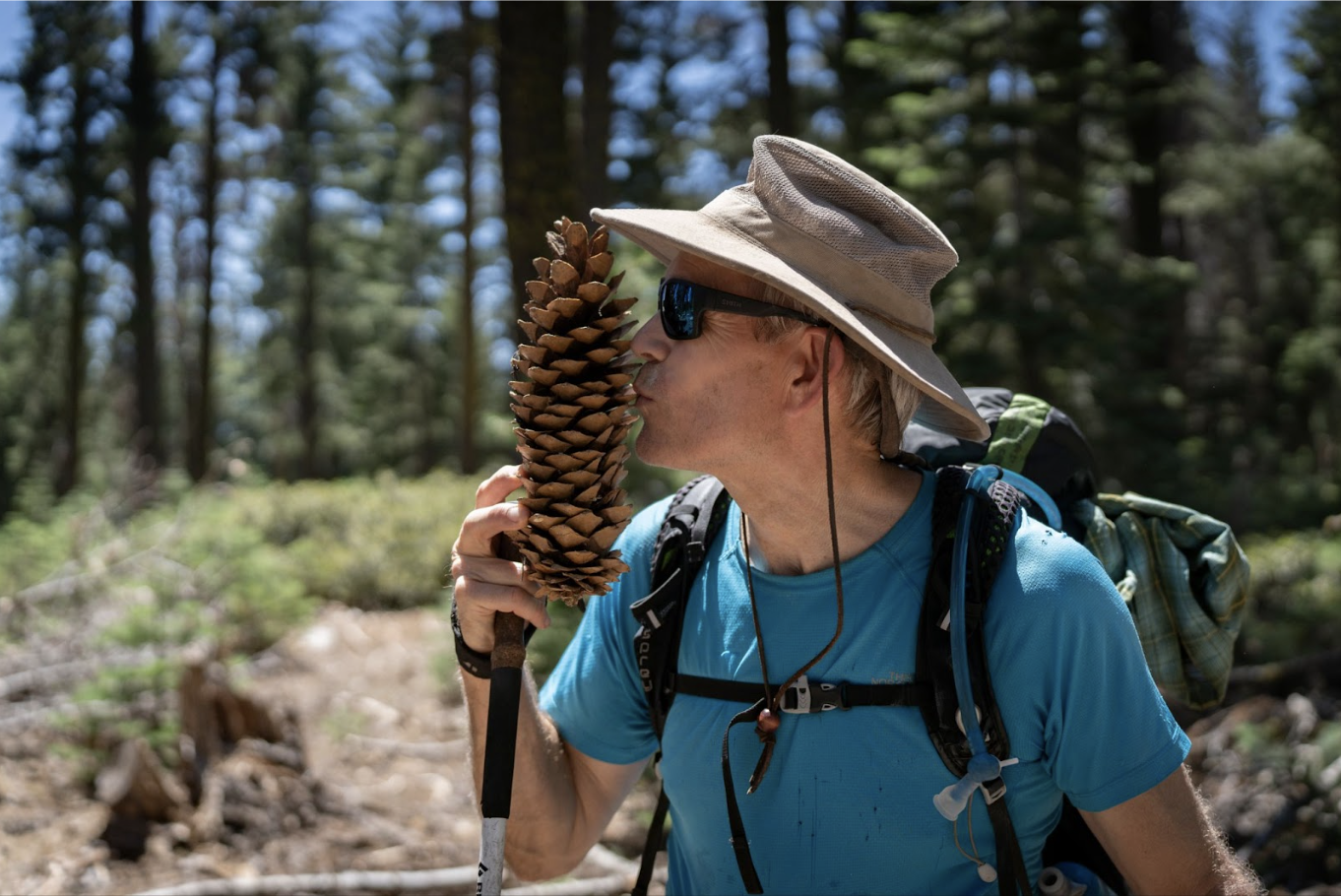
OUTSTANDING STUDENT REPORTING
Credit: Bing Lin, Inside Climate News
-
By Bing Lin, Princeton University. Published by Inside Climate News.
Story links:
A Path Through Scorched Earth Teaches How a Fire Deficit Helped Fuel California’s Conflagrations
Water Issues Confronting Hikers on the Pacific Crest Trail Trickle Down Into the Rest of California
Judges’ comments:
"The four-part package of stories and photos by a graduate student at Princeton University on how climate change is impacting the Pacific Crest Trail was superbly executed. The stories depicted first-hand how fire management, water resources and the culture of outdoor recreation and trails have been adversely affected by a warming planet. Judges said that the photographs taken along a 500-mile stretch of the West Coast hiking trail were a visually stunning addition. The series drew strong support and reaction from readers."
-
By Alex Klaus, Wayne State University. Published by Bridge Detroit.
Story link:
Judges’ comments:
“The reporting shows good investigative depth, based on roughly eight months of work and including more than 20 interviews. The way Alex organized their document review into a detailed timeline of permits, violations, police reports and planning decisions was a really good strategy for journalistic accountability. Even the way they operated under legal threat was quite admirable. The story clearly establishes an environmental justice pattern, though the work would be stronger with more quantitative air quality data from EPA monitors, interviews with environmental health researchers (to talk through exposure risks) and some comparative analysis (e.g. how does enforcement in Detroit differ from similar cities? But overall, this is fine work!”
-
By Ryan Wagner, Washington State University. Published by BBC Wildlife Magazine.
Story link:
Judges’ comments:
“The sea otter story was very strong in explaining the science, and the fact that the original research was first published by one of the world’s leading science journals, Nature, is a very strong plus. The narrative is good as it explores how such a surprising source restored an estuary, and the write-up is very engaging.”
-
By Uma Raja, University of Georgia. Published by Switchboard Magazine.
Story links:
Judges’ comments:
“Uma's done some really good narrative journalism with strong investigative elements. Taking a character-driven approach helped humanize a complex environmental policy story. The FWC body camera footage analysis demonstrates serious reporting chops. However, there is still much that could have been discussed, as one side of the story is quite heavy, while the other side is missing. However, it has a powerful narrative and story telling component.“

RACHEL CARSON ENVIRONMENT BOOK AWARD
Book cover of “Becoming Earth: How Our Planet Came to Life” by Ferris Jabr, Random House
-
By Ferris Jabr. Published by Random House.
Book link:
Judges’ comments:
"Rigorous science, a fascinating cast of characters and one beautiful sentence after another come together to make Ferris Jabr's ‘Becoming Earth’ pure pleasure to read. Taking us along as he plunges a mile into the earth, snorkels through a California kelp forest, corrals a herd of bison in Siberia and scales a rickety observatory high above the Brazilian Amazon, Jabr engages in lively conversation with a diverse array of geologists, chemists, artists and inventors, and we share his delight at the deeply weird and wonderful creatures he encounters along the way. An exploration into how living organisms influence their environments, ‘Becoming Earth’ is packed with history and nuanced science, but it wears its erudition lightly. Jabr is the best sort of guide: meticulous in his word choice, generous with his insights, devoid of condescension and passionate to the last about life's incredible power to remake our planet."
-
By Clayton Aldern. Published by Dutton.
Book link:
Judges’ comments:
"Neuroscientist turned data journalist Clayton Aldern puts his unusual expertise to compelling and thought-provoking use in an examination of climate change's effects on our brains. ‘The Weight of Nature’ is stylishly written and surprising, bringing together areas of research that are too often treated as siloed: the science of our bodies, and the science of the world we move those bodies around in. Aldern goes far beyond a general awareness of climate anxiety or climate grief and into an expansive look at how heat, fire, air pollution, floods, storms and so many other scourges of a warming planet are changing our memories, our language and even our neuroanatomy."
-
By Zoë Schlanger. Published by HarperCollins.
Book link:
Judges’ comments:
"When climate journalist Zoe Schlanger needed a respite from the slow-moving horrors of her daily beat, she found herself paying more and more attention to the plants around her. She started delving into the scientific literature around the latest plant research, too, and that fascination ultimately led to ‘The Light Eaters.’ Deeply reported and beautifully written, ‘The Light Eaters’ asks a question most of us would assume we have an easy answer for: What is a plant? But the answers Schlanger turns up are surprising, fresh and complicated. Can plants ‘see?’ Can they ‘hear?’ How and to what extent do they relate to one another? With judicious caution for the limitations of the existing research, Schlanger travels from California to Cuba, Chile to Berlin, and beyond, following the scientists who are breaking new ground — as it were — in our understanding of plants and their remarkable capabilities."
-
By Jonathan Mingle. Published by Island Press.
Book link:
Judges’ comments:
"Who doesn't love a good David and Goliath story? Particularly when it's told with sensitivity and suspense, when it's bolstered by voluminous reporting and when it's written in clear, self-assured prose? In reporting ‘Gaslight,’ a story of the struggle between one of the country's most powerful utility companies and the citizens who fought against its proposed natural gas pipeline, Jonathan Mingle sat in living rooms and court rooms, attended protests and community board meetings and combed through legal documents. His ensemble cast draws us into this quintessential American story and helps illuminate the significant environmental concerns related to this so-called ‘bridge fuel.’ At a time when we seem to hear about a new environmental rollback every day, Mingle's detailed depiction of a coalition of grassroots groups coming together to kill a 600-mile pipeline serves not just as inspiration but as a very useful primer."
-
By Audrea Lim. Published by St. Martin's Publishing Group.
Book link:
Judges’ comments:
“In this expansive look at societal inequity in the age of climate change, journalist Audrea Lim makes the clever decision to lead her readers back to the land. Challenging the myth of the United States as a nation of rugged individualism, she traces patterns of racial injustice — from indigenous land dispossession and sharecropping schemes to redlining and polluting industries sited in communities of color — and illustrates how, over centuries, landownership has driven inequity. Deftly weaving a personal narrative with on-the-ground reporting from New York City, Puerto Rico, Iowa, Kentucky, Minnesota, Montana and Georgia, she explores alternative approaches to land stewardship and makes a strong case for a reimagining of the commons as a means to achieving climate justice."
-
By Peter Schwartzstein. Published by Island Press.
Book link:
Judges’ comments:
"This deeply reported exploration of how climate change interacts with other drivers of conflict brings readers up close with the farmers, fishermen, pastoralists and pirates already feeling the sting of a changing world. Over the course of a decade, Peter Schwartzstein reported from remotest Iraq, Syria, Bangladesh, Ethiopia, Nepal, Sudan, Burkina Faso and beyond to find out how drought, flooding and other climate-induced events are feeding societal insecurity. A lucid integration of on-the-ground reporting, scholarly research and insight gleaned from climate-security experts, Schwartzstein's book underscores the importance of good governance in a world of increasing climate chaos, and it offers a glimmer of hope in the form of ‘environmental peacebuilding’ — wherein shared climate concerns serve as entry points for communion as opposed to conflict."
-
Yewande O. Addie, PhD., Adjunct Instructor, University of Florida College of Journalism and Communications
AnuOluwapo Adelakun, Freelance Investigative Journalist & Documentary Filmmaker, Docutivism Limited
Suhail Bhat, Deputy Data Editor, USA TODAY
Ramesh Bhushal, South Asia Coordinator, Earth Journalism Network
Paula R. Buchanan, Lead Instructor, National Center for Domestic Preparedness/Columbia Climate School
Audrey Carleton, Reporter, Capital & Main
Katherine KY Cheng, Photojournalist, Freelance
Joydeep Dasgupta, Editor and Founder, News Sense and Media Skills Lab
Delaney Dryfoos, Freelance Environmental Reporter, Brookline News/The Lens NOLA
Joudy El-Asmar, Investigative Environmental Reporter, Freelance
Judy Fahys, Journalist (retired), Salt Lake Tribune/NPR Utah/Inside Climate News
Hazel Feigenblatt, Programs Director, IWPR
Beth Gardiner, Freelance Journalist and Author
Natasha Gilbert, Journalist, Freelance
Bennet Goldstein, Investigative Reporter, Wisconsin Watch
Eva Holland, Freelance Writer and Editor
Jill Hopke, Associate Professor of Journalism, DePaul University
Pei-Yu Lin, Military Reporter, Kitsap Sun
Marcy Trent Long, Executive Producer, Sustainable Asia
Stacy Morford, Senior Editor, Environment and Energy, The Conversation
Safina Nabi, Reporter, Freelance
Deborah Nelson, Professor, University of Maryland
Jennifer Oldham, Independent Journalist
Nicolas Rivero, Climate Solutions Reporter, The Washington Post
Jeff Shaw, Instructor and Adviser, Western Washington University/The Planet Magazine
Dylan Smith, Editor & Co-Publisher, Tucson Sentinel
Joseph B. Treaster, Professor, University of Miami (former New York Times reporter)
Roger Witherspoon, Journalist (retired), Independent
Bob Wyss, Writer and Emeritus Professor, University of Connecticut
Wufei Yu, Fellow, Nieman Foundation for Journalism at Harvard University
Jocelyn C. Zuckerman, Freelance Writer, The Nation/The Guardian/Smithsonian
-
Mohammad Ali, Investigative Journalist, Freelance
Rhysea Agrawal, Managing Editor, The Xylom
Afia Agyapomaa Ofosu, Science Storyteller and Climate Action Activist, Freelance Journalist/The Climate Insight
Suhail Bhat, Deputy Data Editor, USA TODAY
Kendal Blust, Assistant Professor of Practice, University of Arizona
William Buzy, Chief Editor, Contes de faits
Katherine KY Cheng, Photojournalist, Freelance
Delaney Dryfoos, Freelance Environmental Reporter, Brookline.News/The Lens NOLA
Sarah Francis, Assistant Lecturer of Journalism, Ahram Canadian University
Martina Igini, Editor-in-Chief, Earth.Org
Geetanjali Krishna, Contributing Editor, Reasons to be Cheerful
Elaine Kurtenbach, Asia Business Editor, The Associated Press
Marcy Trent Long, Executive Producer, Sustainable Asia
Ejaaz A. Mason, Lecturer in Earth Systems, Stanford University
Temwani Mgunda, Regional Editor (East Africa), Dialogue Earth
Luke Runyon, Co-Director, The Water Desk/University of Colorado Boulder
Nicolas Rivero, Climate Solutions Reporter, The Washington Post
Aditi Tandon, Senior Production Editor, Mongabay India
ESTEEMED JUDGES AND SCREENERS
Cynthia Barnett, Freelance Journalist and Author; EJ Instructor, University of Florida
Dan Fagin, New York University
Sonia Narang, Multimedia Journalist
Ex Officio:
Tony Barboza, Executive Editor, Capital & Main; SEJ Board Liaison to the Awards Committee